
ACTIVITIES
Archaeology
& Volcanic Heritage
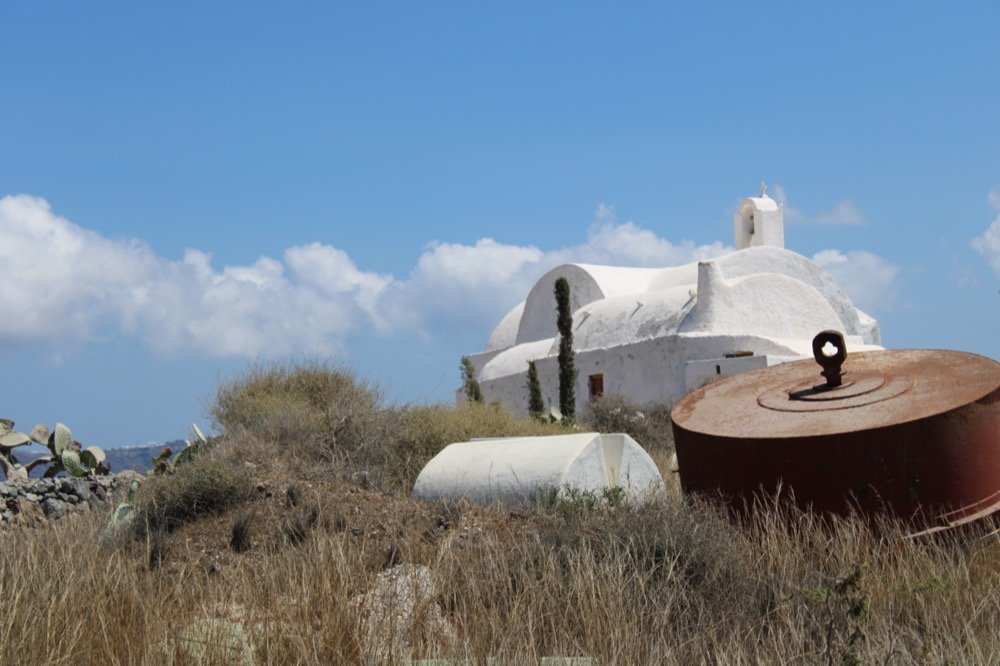
Explore the archaeological, cultural and geological heritage of the Santorini Caldera through visits to some of its most significant historic sites and volcanic landscapes.
Across the caldera from Therasia, the prehistoric settlement of Akrotiri offers a remarkable insight into life in the Aegean during the Bronze Age. Buried beneath volcanic material following the major eruption of the second millennium BC, the settlement preserves streets, multi-storey buildings, wall paintings and objects from everyday life. Together with Santorini’s archaeological museums and the ancient city of Thera, it reveals the islands’ long relationship with trade, seafaring, art and the volcanic environment.
Therasia Island preserves a quieter but equally meaningful layer of the caldera’s cultural landscape. Historic churches, traditional villages and cave-built settlements such as Agrilia reflect the island’s religious, agricultural and architectural heritage. The Church of Agia Eirini, or Santa Irini, located within the courtyard of Santa Irini Retreat, also forms part of a documented historical tradition associated with the origin of the name Santorini.
The geological story continues at Nea Kameni, the volcanic island at the centre of the caldera. Walking paths cross a stark landscape of lava formations and volcanic craters, offering a close view of the natural processes that continue to shape the Santorini island group. The excursion may be combined with a swim in the warm, mineral-rich waters near Palea Kameni.
Together, these sites reveal the Santorini Caldera not simply as a landscape of exceptional beauty, but as a living record of human settlement, cultural continuity and geological transformation.